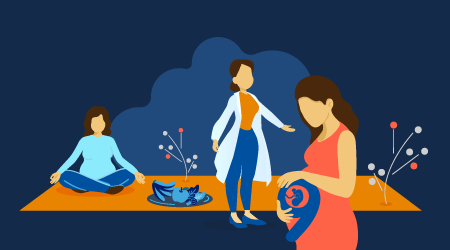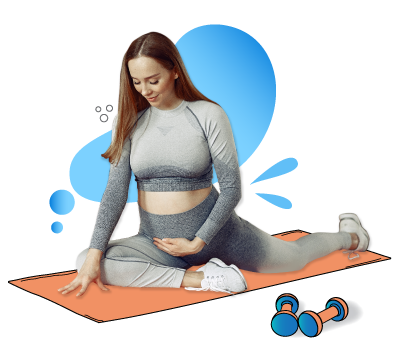
Gentle prenatal yoga may help some women feel more comfortable with mild pelvic discomfort, but it depends on what is causing the pain. Pelvic pain in pregnancy should always be mentioned to your doctor, and yoga should only be done once you have been cleared for exercise. Pelvic discomfort can show up at the front of the pelvis, deep in the hips or buttocks, or when walking, climbing stairs or turning in bed, often because hormones loosen the pelvic ligaments and the baby’s weight changes how load passes through your pelvis. Our live online pregnancy yoga classes focus on controlled, supported, pregnancy-appropriate movement so you can stay active without pushing into pain.
Gentle, pregnancy-appropriate yoga may support mobility and relaxation, but it is not a treatment for pelvic pain. Whether it suits you depends on the cause and severity, so please speak to your doctor first.
Often yes, with modifications, but you should confirm with your doctor first. Many women need smaller movements and more support than in a regular class, and if you are cleared for exercise, gentle yoga can be adapted to stay within a comfortable range.
Because the triggers differ from person to person, gentle guided practice helps more than one fixed routine.
Because the pelvic joints are looser in pregnancy, wide-legged positions, deep hip-opening stretches, movements that load one leg heavily, and deep squats are approached with caution or avoided. Any movement that increases pain should be stopped, and your instructor will suggest gentler alternatives.
Featured Pregnancy Yoga Experts / Trainers
Gentle, pregnancy-appropriate yoga may support mobility and relaxation, but it is not a treatment for pelvic pain. Whether it suits you depends on the cause and severity, so please speak to your doctor first.
Often yes, with modifications, but you should confirm with your doctor first. Many women need smaller movements and more support than in a regular class, and if you are cleared for exercise, gentle yoga can be adapted to stay within a comfortable range.
Pregnancy hormones loosen the ligaments that hold the pelvic joints together, and the weight of the growing baby changes how load passes through your pelvis and hips. Standing on one leg, climbing stairs or turning in bed can feel uncomfortable because the joints share the load unevenly. It is often easier to notice in the second and third trimesters.
We start by asking where the pain is, what triggers it and what your doctor or physiotherapist has advised. Sessions then use smaller, controlled movements within a comfortable range, support from a wall, chair or cushions, even weight on both sides, gentle hip mobility and breath awareness. Your instructor sees you on screen and can suggest a safer variation straight away.
Wide-legged stretches, deep hip openers, deep squats and movements that load one leg at a time may aggravate pelvic discomfort in some women, so they are reduced or avoided. Your instructor will guide you based on your symptoms.
It can if a movement is not suitable for your body. Stop any movement that increases pain and tell your instructor so the session can be changed.
Yes, once your doctor has cleared you. Sessions can be paced for beginners, and in the third trimester movements usually need greater modification, as long as your doctor agrees. Comfort comes first.
Contact your doctor promptly if the pain is severe, getting worse or stopping you from walking normally, or if it comes with vaginal bleeding, leaking fluid, regular tightening of the belly, fever, or pain or burning when passing urine. Also speak to your doctor if the pain started suddenly after a fall.


Select your health concern
Go to Experts Listing
Select Service provider of your choice
Login/Sign up to make payment
Get Response and Avail Consultation