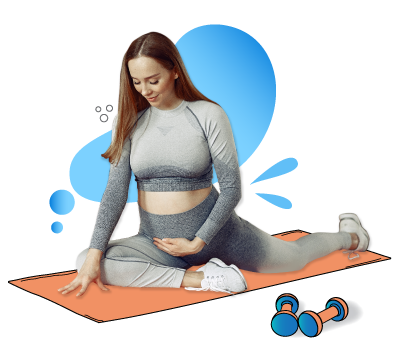
Gentle prenatal yoga and a calming wind-down routine may help you feel more relaxed and comfortable at bedtime. Yoga is not a treatment for sleep problems, and if your sleep is badly affected, you should speak with your doctor. Sleep often gets harder as pregnancy moves along, with a growing belly, back or hip discomfort, cramps, frequent urination, heartburn and worry all playing a part. Our live online pregnancy yoga classes help you build a slow, evening-friendly routine with comfortable side-lying and supported positions that eases the body and quiets the mind, without complicated equipment.
Gentle yoga and relaxation may help you unwind and build a calming bedtime routine. It is not a treatment for a sleep disorder.
A growing belly makes it hard to find a comfortable position, back, hip or leg discomfort, leg cramps and frequent urination can wake you, heartburn and breathlessness can be worse when lying down, and worry about the baby and delivery can keep your mind busy at night.
Yoga is one part of the picture. Many maternity guidelines also suggest sleeping on your side in later pregnancy, using pillows for support, and keeping a regular bedtime. Your doctor can advise you on anything specific to your pregnancy.
Featured Pregnancy Yoga Experts / Trainers
Gentle yoga and relaxation may help you unwind and build a calming bedtime routine. It is not a treatment for a sleep disorder.
A growing belly makes it hard to find a comfortable position, back, hip or leg discomfort, leg cramps and frequent urination can wake you, heartburn and breathlessness can be worse when lying down, and worry about the baby and delivery can keep your mind busy at night.
Many women prefer gentle practice in the early evening or as part of their bedtime routine. Keep it slow and comfortable, not energetic, and avoid anything strenuous close to bedtime. Gentle movement is fine for most healthy pregnancies once your doctor has cleared you.
Sessions use slow, gentle, evening-friendly practice with side-lying and supported resting positions using pillows or cushions, release for the hips, back, neck and shoulders, and a simple wind-down routine you can repeat at home. Your instructor adjusts movements to your trimester and discomfort.
Slow, comfortable breathing may help you wind down. Learn the techniques from a trained instructor and avoid forceful breathing.
Yes. No earlier yoga experience is needed, and sessions are paced for beginners. In the third trimester, with your doctor’s clearance, movements are modified and more supported.
Yoga is one part of the picture. Many maternity guidelines also suggest sleeping on your side in later pregnancy, using pillows for support and keeping a regular bedtime. Your doctor can advise you on anything specific to your pregnancy.
No. Yoga can support relaxation but should not replace medical care. Talk to your doctor or midwife if sleep problems continue for many nights, or if you have loud snoring with pauses in breathing, waking up gasping, restless legs, a severe headache, vision changes, sudden swelling of the face or hands, or low mood, constant worry or panic attacks.


Select your health concern
Go to Experts Listing
Select Service provider of your choice
Login/Sign up to make payment
Get Response and Avail Consultation