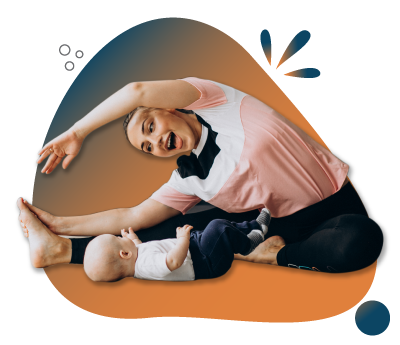
The pelvic floor muscles support your bladder, uterus and bowel, and they work hard during pregnancy and birth. Leaking urine, a heavy feeling or discomfort are common after delivery, but they are not something you simply have to live with. Gentle postnatal yoga may support recovery, alongside advice from your doctor or a pelvic floor physiotherapist. Our live online classes use breathing, posture and gentle movement to help you reconnect with your pelvic floor, and avoid movements that add pressure. We do not diagnose problems. We ask you to get an assessment if symptoms continue.
The pelvic floor is a group of muscles and connective tissues at the base of the pelvis that support the bladder, uterus and bowel. These muscles also help control urine and bowel movements and contribute to core stability. Pregnancy and childbirth can affect their strength and coordination, making postpartum recovery important.
Urine leakage is common after pregnancy and childbirth, particularly when coughing, sneezing, laughing or exercising. However, it should not be dismissed as something you simply have to live with. Pelvic floor exercises and individual assessment may help, so consult your doctor or a pelvic floor physiotherapist if leakage persists or affects your daily activities.
We avoid high-impact moves, heavy lifting, deep core work and long holds that cause leaking, heaviness or pain. Yoga is not a treatment for prolapse or injury, which needs an examination.
Featured Postnatal Yoga Experts / Trainers
The pelvic floor is a group of muscles and connective tissues at the base of the pelvis that support the bladder, uterus and bowel. These muscles also help control urine and bowel movements and contribute to core stability. Pregnancy and childbirth can affect their strength and coordination, making postpartum recovery important.
Urine leakage is common after pregnancy and childbirth, particularly when coughing, sneezing, laughing or exercising. However, it should not be dismissed as something you simply have to live with. Pelvic floor exercises and individual assessment may help, so consult your doctor or a pelvic floor physiotherapist if leakage persists or affects your daily activities.
Gentle pelvic floor exercises may often begin soon after childbirth, when comfortable and when there are no medical reasons to delay them. The timing of postnatal yoga depends on your delivery, recovery and symptoms. Consult your healthcare provider before starting a structured exercise programme, especially after a C-section or a complicated delivery.
Postnatal yoga may support recovery through gentle movement, breathing coordination, posture awareness and appropriate pelvic floor engagement. However, yoga alone may not address every pelvic floor problem. Some women need to strengthen these muscles, while others may need help relaxing them. The right approach depends on your symptoms and individual assessment.
You may benefit from a pelvic floor physiotherapist if you experience urine leakage, pelvic heaviness, pain, difficulty controlling bowel movements or a feeling of pressure in the vaginal area. A physiotherapist can assess your pelvic floor function and recommend exercises suited to your needs. Postnatal yoga may complement this guidance when appropriate.
Postnatal yoga may be suitable after a C-section once your healthcare provider has cleared you for exercise and your recovery allows it. Start gently and avoid movements that cause pain, excessive abdominal strain or pulling around the incision. Remember that pregnancy itself can affect the pelvic floor, even when delivery is by C-section.
Avoid or modify movements that trigger urine leakage, pelvic heaviness, vaginal pressure, pain or a feeling of downward pulling. High-impact exercises and strenuous movements may need to be postponed until your pelvic floor is ready. Not every woman needs the same restrictions, so progress gradually with guidance from a qualified instructor or healthcare professional.
Recovery varies depending on your pregnancy, delivery, symptoms and pelvic floor function. Some women notice improvement over weeks or months, while others need a longer period of guided rehabilitation. There is no single timeline that applies to everyone. If symptoms persist or worsen, consult a healthcare professional rather than relying on time alone.
Pelvic heaviness or pressure can sometimes be associated with pelvic floor dysfunction or pelvic organ prolapse. Gentle, appropriately modified exercise may be part of a recovery plan, but these symptoms should be assessed before you begin or progress your practice. Consult your doctor or pelvic floor physiotherapist, particularly if the sensation persists or worsens.
Online postnatal yoga may be an option once you have been cleared for exercise and your symptoms have been considered. Look for classes that include postpartum-appropriate modifications, breathing guidance and gradual progression. If you experience leakage, pain or pelvic heaviness during a session, stop the movement and seek professional advice.
Pelvic floor exercises may help some women with bladder or bowel control problems, but the appropriate exercises depend on the underlying cause and muscle function. Persistent symptoms, difficulty emptying the bladder or bowel, or loss of bowel control should be discussed with a healthcare professional for an individual assessment.
Consult a healthcare professional if you experience persistent or worsening urine leakage, pelvic pain, heaviness, a vaginal bulge or difficulty controlling bladder or bowel movements. Seek prompt medical advice if you cannot empty your bladder, have severe pain or develop sudden, concerning symptoms.


Select your health concern
Go to Experts Listing
Select Service provider of your choice
Login/Sign up to make payment
Get Response and Avail Consultation